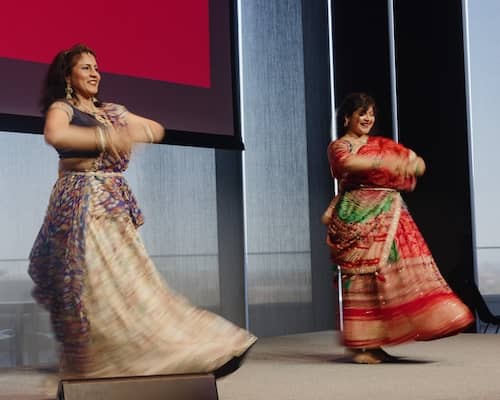
Diwali comes from the Sanskrit word Deepavali, meaning "a row of lighted lamps." Celebrated by over a billion Hindus, Sikhs, Jains, and Buddhists worldwide, its universal promise is the same everywhere: light over darkness, good over evil, and knowledge over ignorance. It reflects a core philosophy we live by every day: Always raising our level of awareness and choosing to do the right thing.
Where I am from, the story is Lord Rama's. After 14 years in exile and a war to rescue his wife Sita, he returned to his city on the darkest night of the month, and the people lit rows of clay lamps so their king could find his way home. Other regions tell their own stories, but the thread is always the same: someone coming out of the dark, and the collective effort of bringing in light.
Growing up in Varanasi (Kashi), preparations began with deep cleaning to welcome Lakshmi, the goddess of good fortune – as my grandmother said, "You do not invite good fortune into a messy heart." She soaked clay diyas while we children pretended to help and rolled cotton wicks between her fingers. When one of us asked why she bothered, she said, "A lamp that is prepared properly burns the longest." I think about that every time I am tempted to rush something.
On Diwali night, my father handed me a lit diya for our threshold so our house could be found in the dark, teaching me early on that our lives must hold enough light to guide others.
Interested in a job at Rocket®?
See all of our opportunities today.
That lesson carried into my professional life when Mr. Cooper became part of Rocket. When something you love changes its name, your first thought is about what you might lose. As a leader, my worry was for my team: Would the way we worked, and the way we celebrated, still have a place? Our first Diwali as Rocket team members came only weeks after the companies came together, and I wondered quietly whether it would feel the same.
Approaching change with a mindset of "We'll figure it out" showed us that our traditions didn't shrink – the company made room for them. The first sign was small. In the week before Diwali, a U.S.-based team member asked during a meeting what the different sweets were called and whether there was a right way to wish someone a happy Diwali.
At Rocket India, the celebrations begin with sweets. Days before the festival, boxes start appearing in the office, shared by team members – some homemade, some from the old shops our families have trusted for decades. Teammates embrace our culture, wearing kurtas and sarees, sharing sweets, and celebrating together. There's a rangoli at the entrance, and the office looks more like a festival place than an operations floor. You'll see most of us in the cafeteria capturing pictures with each other.
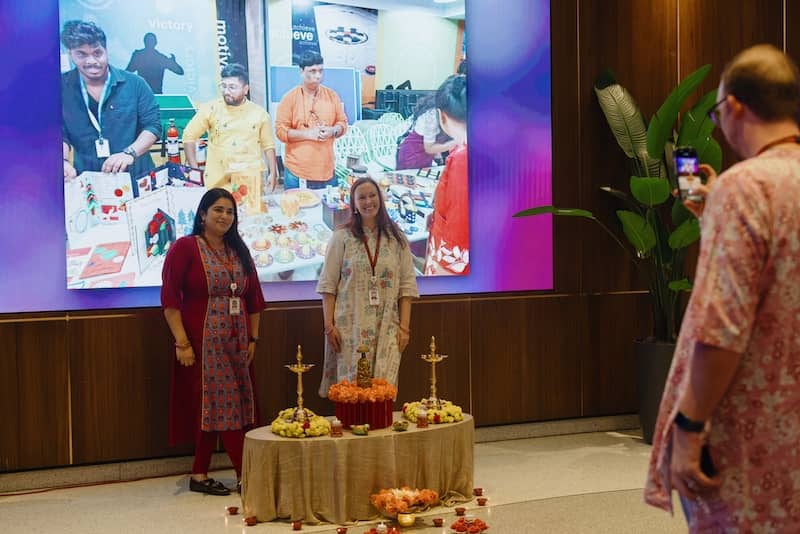
Through The Asian Network, one of the Team Member Resource Networks (TMRNs) at Rocket, we help make sure team members outside India are part of it too, sharing what the festival means and how to celebrate along with us. One of our proudest moments came this year when we hosted our first in-person Diwali celebration at the Detroit office at Rocket. When a team member in Detroit asks what a diya is, that is the network doing exactly what it was built to do. Every question is a door opening.
That idea of helping others find their way carries into how I lead my team, too. On a hard day, a leader's job is the same as the lamp at the main door. You do not need to light the whole street. You need to stay lit, so your team can find the door. That means staying calm when the numbers are bad, saying "I do not know yet, but we will figure it out" instead of guessing, and making sure the newest person on the team knows exactly who to ask. Light is not loud. It is steady.
If you celebrate, I hope your home is full, and your diyas burn slowly. If you do not, find someone who does and ask them about it – you will be handed a sweet before you finish the question.
Shubh Deepawali – Happy Diwali from Rocket India, from Kashi, and from me!
When work led me to Bengaluru, I had my first Diwali away from home. Every year before Diwali, my mother calls and asks, "Are you coming home this time?" For years the answer was yes. The first year it was "Not this time, Ma," she went quiet for a moment, then told me to light a diya anyway.
I expected the day to feel like something was missing. Instead, my wife and I cleaned our small flat corner by corner, the way my mother would have. She made the rangoli at the door while I argued with a string of lights. In the evening, our neighbors knocked with a plate of sweets, and we went down with ours. Somewhere between the second floor and the third, I realized the whole building smelled of mustard oil and ghee, exactly like my childhood lane in Varanasi. By nine o'clock, with cousins and friends crowded in, our flat was as loud as any Diwali I remember.
I realized home isn't defined strictly by geography; home is wherever you light the lamp and leave the door open.
Join Our Talent Network

Related resources
6-MINUTE READ
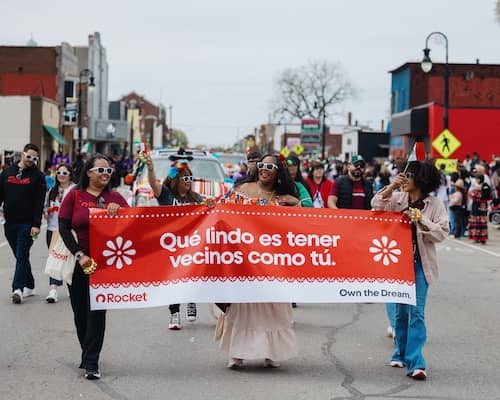
Unidos, Somos Más: Belonging at Rocket
Mi Gente president Yariani Sosa Romero-Anderson shares how Puerto Rican identity, language, and community shape belonging at Rocket and the meaning of togethern...

4-MINUTE READ
We are the ‘they’: How TMRNs are creating a more inclusive workplace
Rocket is committed to creating an environment that’s inclusive of every team member. The TMRNs are dedicated to growing and supporting that inclusive environme...

5-MINUTE READ
We’ll Figure It Out
Rocket® is driven by our ISMs, company philosophies that influence our culture every day. Read Jen Blatz’s take on a few of her favorite ISMs.